
"The Portrait of an Extraordinary Woman"
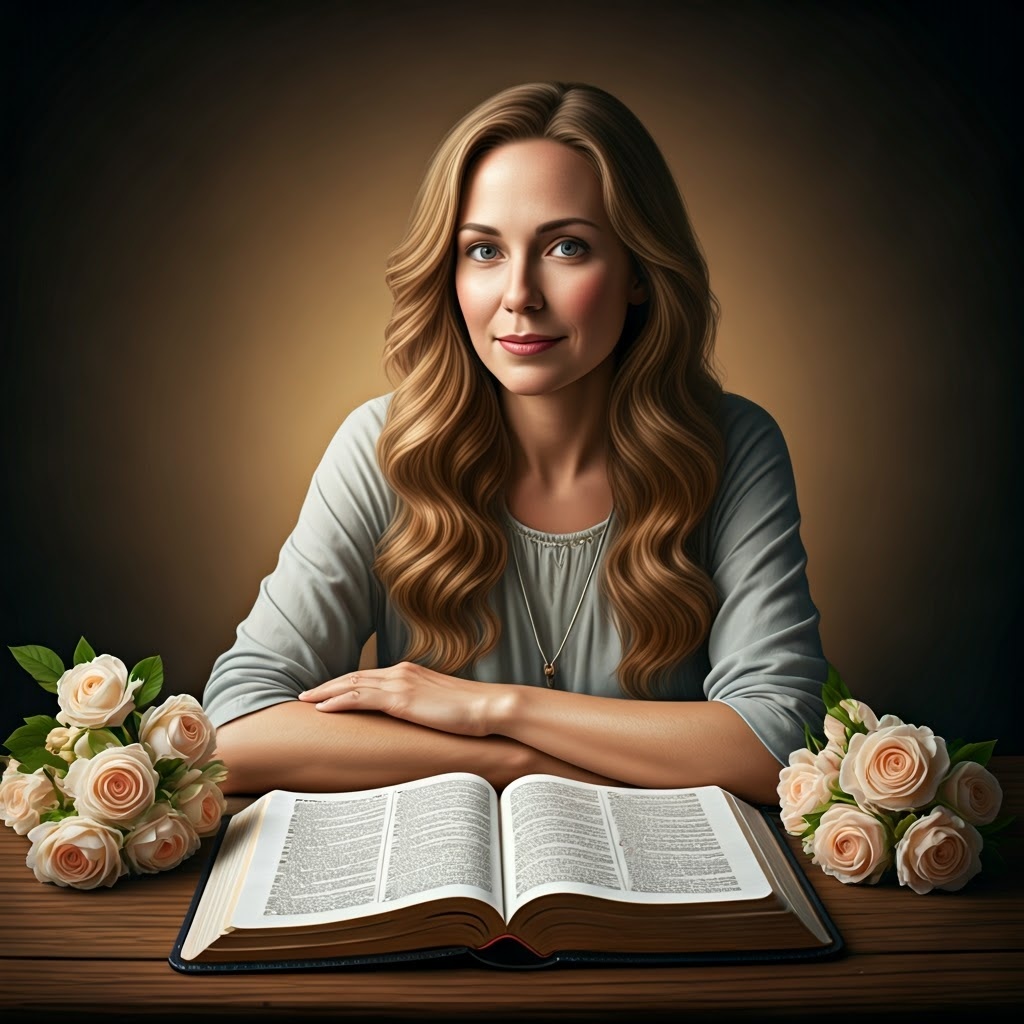
The Portrait of an Extraordinary Woman
“In this workshop, we will look at some specific characteristics of the virtuous woman in Proverbs 31, and how we can practically apply these attributes in our lives through the grace of God and the working of His Holy Spirit.”
Opening Prayer:
Opening Thoughts:
When I thought about a workshop, I was thinking of some wonderful biblical women like, the Proverbs 31 woman, Sarah, Ruth, Lydia, Hannah and so many others and the question I asked my Pastor was that in his extensive experience does he find that a large percentage of women, single and married, look at these biblical examples as unattainable and not relatable. He emphatically and unfortunately indicated, yes! However, they were redeemed sinners, just as we are.
Later we will be breaking out into individual groups, and each group will be assigned a biblical woman to discuss, learn from and to share an attribute or some striking qualities with the larger group. Note: We have 8 women who will be studied, which gives us approximately 5 women or less per group. This should give some wonderful in-depth conversation about the biblical woman you are studying. In your handouts, you will also have each of the 8 women to examine at your leisure, along with the questions for further study.
The focus will be what we can learn as Christian women in the current age and what were the qualities that you felt strongly about in her character and how we can apply these traits to our Christian Walk.
First, let us lay the groundwork, keeping an open mind, thinking a bit differently about these women from something lofty and unattainable to women the Lord has chosen for us to learn from.
Let’s read Proverbs 31 together beginning at verse 10
High Regard for Women
As you know, the Lord has a very high regard for women, and we are made in his image reflecting His character. The women of the Bible were extraordinary, for sure, however they were also sinners like we are. I laughed to myself as I was studying this text, Proverbs 31 woman, thinking that it must have been nice to have servants that would help you do things. Well, we have them, but we don’t call them servants anymore, we call them dishwashers, washing machines, dryers, AI (Artificial Intelligence) you see the point. We can look at this wonderful woman and want to develop some of her character traits without it feeling too lofty that are not relatable or unattainable. What are some of her attributes that you can mention about our Proverbs 31 woman that resonate with you? (Interactive)
Verse 10: She is far more precious than jewels. What can be said here is that we may need to elevate our perception of ourselves and our role as women, wives, mothers, employees, employers, etc.
Question to group: Do you think we feel too little (beyond being biblically humble) about ourselves and downplay our opinions and input?
Verse 15: By providing for her household before the day begins, multiplies the effectiveness of her work. Her planning enables everyone in her household to be productive throughout the day.
Verse 16: She is not confined to the home but is engaged in business. This verse demonstrates remarkable financial independence for a woman in the ancient world. She considers a field (indicating wise judgement) and buys it. She is profitable.
Verse 23: Gates were the center of civic and economic life in an Israelite city. The wife’s excellent work and noble character have contributed significantly to her husband’s success and reputation.
Verse 25: Strength and dignity are so much a part of her character and conduct that they seem to be almost like her clothing. She laughs at the future, in contrast with being worried of fearful about it.
The solution is always going to be to ask the Lord to mold us, and if our heart’s desire is to have more of that attribute because it is glorifying to God, and will help those around you, He answers prayer. You could keep a prayer journal to track your progress and prayer requests for these things. How many of you write down prayers, thoughts, meditations, etc. on a regular basis? You can use one that is very structured, a blank notebook, or any tool the Lord leads you to.
Here is what Lydia Brownback writes about “The Woman Who Fears the Lord”
“An excellent wife, who can find?” So begins the poem that concludes the book of Proverbs, and as we measure ourselves against this portrait of a godly virtue, many of us cannot help but sigh in agreement and maybe even turn away in discouragement.
Although she is depicted as an ideal woman, however, we won’t find her to be intimidating once we understand the purpose of the poem. What we are to glean from her is a heart attitude: what about her heart enables her to live the life she does? Her life is a picture of what happens when everything else in Proverbs is applied. She is a portrait of feminine wisdom. She embodies the full character of wisdom shown throughout the entire book of Proverbs.
First, she is wise as a wife, which is clear from the fact that her husband trusts her (Prov. 31:11) and praises her (v.28); and because she faithfully carries out her wifely calling, her husband is able to excel at his own calling (v. 23). Additionally, no matter what task she is involved in, her overarching aim is the nurture of others. She provides food for those in her home, including the servants (v. 15); she extends her hand to the poor and needy (v. 20); and she watches over the ways of her household (v. 27) Those virtues and others she displays are taints of wisdom taught throughout Proverbs.
One of the most prominent themes in Proverbs is the way in which our words expose us as either wise or fools. This is why the woman in the poem “opens her mouth with wisdom, and the teaching of kindness is on her tongue” (v. 26). Another theme is diligence, which is woven all through this poem. The woman is purposeful with her time. How we use our time both reveals us as wise or foolish and determines which of those two paths will mark our destiny.
All her wise activities spring from her wise heart, which is rooted in the fear of the Lord (v. 30). And because she fears the Lord, she is depicted as a confident woman who is unafraid of what the future might hold (v. 25). This is the bedrock of all her wise behavior. She is a good wife and mother, and industrious, and financially shrewd, and kind, and charitable because she fears the Lord.
And in that way, we can indeed be like her. Redeemed by Christ and given a new identity by grace, a new life of wisdom opens before us. She is the picture of wise living, but not primarily for how to be a better homemaker or a businesswoman. Rather, the overall picture of the poem is that those who fear the Lord are blessed and become a blessing to others.”
Breakout Groups
Questions to ask:
What are the most outstanding qualities of this woman? How does that apply to us as women today?
1. Abigail (1 Samuel 25: 3, 14, 18, 23-24, 32-35
Profile: Abigail (from The Women’s Study Bible)
Abigail was the wife of Nabal, a wealthy but extremely foolish man. Nabal insulted David by refusing to care for and feed David and his men. His rudeness made David very angry, but Abigail wisely convinced David not to take vengeance. She sent food to Daid and spoke humbly and respectfully to him. Abigail calmed David’s anger and persuaded him not to kill her wicked husband and his household. Impressed by Abigail’s wisdom and discernment, David blessed Abigail and sent her home in peace. When she told Nabal what had happened, his “heart died within him” (25:37) A few days later the Lord struck Nabal and he died. Following his death, David married Abigail.
Question: What about Abigail do we think that David found so compelling?
Group questions to report back:
What are the most outstanding qualities of this woman? How does that apply to us as women today?
2. Lydia (Acts 16: 13-15, 40)
Lydia of Thyatira is considered the first recorded convert to Christianity in Europe. She is described as a dealer in purple cloth from the city of Thyatira, a region known for its dyeing industry. Paul and his companions baptized her and her household after she listened to Paul’s preaching in Philippi. A true believer, she was hospitable toward Paul and his companions. She urged them to stay in her home if they considered her a true believer in the Lord. This act of hospitality highlights her immediate commitment to the Chirstian faith and the support of its spread. Lydia ‘s role as a merchant of purple cloth suggests that she was a woman of wealth and independence. Purple cloth was expensive and typically worn by the elite, indicating that Lydia was likely a successful businesswoman. Lydia’s story is important because it demonstrates the spread of Christianity outside traditional Jewish context. She is often remembered as a symbol of faithful Christian discipleship and is revered for her role in supporting the early Christian community through her resources and hospitality.
Question1: Lydia was a successful businesswoman and was a woman of wealth. Do we have any negative thoughts about a Christian woman being successful in business or a person of wealth is to be looked at with caution? The Lord was with Lydia in and brought her into this status for a purpose. Do you need to rethink your attitudes about money and success?
Question 2: Lydia apparently became a key layperson in the church at Philippi. What is your role in your church? How might God be able to use you through your church?
Group questions to report back:
What are the most outstanding qualities of this woman? How does that apply to us as women today?
3. Rahab (Joshua 2:1-7, 10-14)
Profile: Rahab (From the Women’s Study Bible)
Rahab was a Gentile prostitute who lived in Jericho. When Joshua sent two spies to gather information about the city, she hid the men from the king. She also deceived the men who came looking for the spies. She convinced them to leave the city in pursuit of the spies who were hidden on her roof. She demonstrated a remarkable awareness of Israel’s history and the Lord’s intention to give Israel the land of Canaan. In her household when Israel destroyed Jericho, Rahab was Boaz’s mother and is one of four women listed in the genealogy of Jesus. She is commended in the NT for her faith and for her good works.
Discuss Rahab’s faith and her negotiating skills
(also read “A Heroine by Faith” by Carolyn Arends) “God does His best work with the least likely people. For those who believe, human weakness becomes the perfect opening for diving strength.”
Question for the group: Something inside Rahab made her respond to the spies favorably. What does the Holy Spirit prompt you to do that is out of character for you?
Group questions to report back:
What are the most outstanding qualities of this woman? How does that apply to us as women today?
4. Esther (Esther 7:1- 10, 8:7
“Such a Time as This” by Elizabeth W.D. Groves
“God is present even when we don’t notice him. God is never once mentioned in the Book of Esther, yet He was clearly present and involved. This is true even if we don’t like the way He is arranging things. It is sad that Esther was an orphan, yet it was essential that she live with Mordecai at that particular time. God is in each detail!
· Mary Kassian, “Esther won the royal pageant which made her the Queen. She may have gone into the pageant to assure her family of food and security, although God wanted to use the king’s penchant for beautiful to fulfill a greater purpose- both for Esther and for the Jews.
She was reluctant at first when presented with the mission when challenged, however she stepped up and accepted the assignment.
We also learn that each of us has an assignment. Esther’s assignment of petitioning the king was risky and frightening as the outcome was uncertain. God provided Ether the strength and wisdom to do what he asked her to do, and the outcome was beyond what she could have imagined. Her story challenges us to look beyond our circumstances, limitations, and fears, and ask the Lord, what is your assignment for me?”
Question for group: When challenged with a very important mission, which she accepted, what should our thought process be if we are faced with a task we may originally be reluctant to accept?
Group questions to report back:
What are the most outstanding qualities of this woman? How does that apply to us as women today?
5. Ruth, the Moabite (Ruth 1:16-19)
There were reports of Ruth’s loyalty to Naomi, which was impressive considering the love she had for Naomi and her Trust in the Lord. Can people we know say these things of us?
“Redemptions Story” by Kathleen B. Nielson
“God is first of all overseeing the story, How did the baby come into being? Ruth and Boaz obviously had a role- but the text, “The Lord gave her conception.” (Ruth 4:13) Conception is God’s gift to give, in His own timing. Ruth had been married to her first husband (now deceased) for 10 years and was not given this gift. Now God gives it. Now God gives it. He is in charge of it. What is God doing at any joyful or sorrowful point in my life? He is overseeing the story…The book ends with praise to God who abundantly provides for his needy people, generation after generation. What is God doing, at any blessed or bitter point in my life? He is offering the resolution of his abundant provision, to be received by His people with praise in our mouths. What is God doing, at any point in any of our stories? He is accomplishing redemptions story, through the gift of His own Son. And, so along with the women here in Ruth, we can bless the Lord who has not left us without a Redeemer.”
Question for the group: Naomi’s faith obviously influenced Ruth. How does your faith affect other people? Do you encourage people toward God?
Group questions to report back:
What are the most outstanding qualities of this woman? How does that apply to us as women today?
6. Deborah (Judges 4:4-10, 5:1-3)
· Deborah was not afraid to be in a high-profile position of a Judge in Israel. We need to support our Christian brethren who are servicing in Government Office
· Barak knew her qualities and wanted he and Deborah to go with him. He trusted in her capabilities, and she trusted in the Lord.
“Profile: Deborah”
When the Canaanite King Jabin, with his 900 chariots of iron, oppressed Israel, the Lord raised up a woman to save them. Deborah, a prophetess, was called to lead the nation as a judge and deliverer. Since women did not usually go into battle, Deborah called upon Barak to lead the army against Jabin, but then Barak insisted that Deborah go into battle with him. Following the victory, Deborah and Barak sang a song of praise to the Lord. The defeat of Jabin ushered in a period of 40 years of peace for the people of Israel. Although many of the judges made poor choices during their rule, Deborah’s actions and words consistently pointed to God.
Question for the group: Deborah was very brave, wise and had a very important profession. How would you handle a calling to be out of your comfort zone?
Group questions to report back:
What are the most outstanding qualities of this woman? How does that apply to us as women today?
7. Mary Magdalene and the women at the cross and the tomb: Mary Magdelene, Joanna and Mary, the mother of James were specifically named.
Luke 23:48-49, 23:54 -24:1-12
Women accompanying Jesus: Luke 8:1-3, Mary Magdalene, Joanna, the wife of Chuza, Susanna, and many others.
Women standing at the cross of Jesus, his mother and his mother’s sister, Mary, the wife of Clopas and Mary Magdalene. John 19:25-27
Profile: Mary Magdalene
Mary was called Magdalene because she was from Magdala, on the western shore of Galilee. She experienced incredible healing when Jesus drove out seven demons from her (Luke 8:2). Mary Magdalene became a faithful and courageous disciple of Jesus. After witnessing the crucifixion, she visited Jesus’ tomb to complete burial preparations – only to find the tomb empty. She became the first person to witness the resurrected Jesus when he appeared to er as she stood outside the tomb weeping. Distraught, she first supposed Jesus to be the gardener. But all Jesus had to do was to say her name and Mary Magdalene recognized her beloved Lord. It was she who ran to tell the disciples of Jesus resurrection.
Question for group: Luke and Mark celebrated Christ’s goodness and grace toward Mary Magdalene. When was the last time you celebrated Christ’s goodness and grace toward you. What keeps you from celebrating it more often?
Group Questions to report back:
What are the most outstanding qualities of this woman? How does that apply to us as women today?
8. Martha and Mary (Luke 10:38-42)
Profile: Martha
Martha was the sister of Mary and Lazarus. The three of them were close friends of Jesus. Martha welcomed Jesus into her home in Bethany, where she prepared him meals as he taught. A conscientious hostess, Martha busied herself with serving her guests while Mary chose instead to listen to Jesus’ teaching. This frustrated Martha, but Jesus gently rebuked her and defended Mary’s desire to learn from him (10:30-42). It was Mary and Martha who sent word to Jesus when their brother Lazarus had died by the time Jesus arrived at their home, Martha believed that God could work a miracle through Jesus. When Jesus gave Martha an opportunity to express her faith, she replied, “Yes, Lord: I believe that you are the Christ, the Son of God, who is coming into the world”. (John 11:27)
Question to ask in the group: What life principles did you learn from the study of the lives of Martha and Mary? Group question to report back: What are their most outstanding qualities? How does that apply to us as women today?
Report back what suggestions were made to incorporate some of the attributes of the women we studied in our day and age as godly women.
Do we want to expand on any one of these with the time we have remaining? Do they have any common threads?
I found some wonderful character traits for us to consider enhancing in ourselves, from Barbara Hughes, “Disciplines of a Godly Woman.”
● Discipline of Prayer, Ephesians 6:18, “And pray in the spirit on all occasions with all kinds of prayers and requests. With this in mind, be alert and always keep praying for all the saints.”
● Discipline of Worship, Romans 12:1, “Therefore, I urge you, brethren, by the mercies of God, to present your bodies a living and holy sacrifice, acceptable to God which is your spiritual service of worship.”
● Discipline of Mind, Romans 12:2, “Do not conform any longer to the pattern of this world but be transformed by the renewing of your mind.”
● Discipline of Contentment, Psalm 38:9, “All my longings lie open before you, O Lord.”
● Discipline of Propriety, Philippians 1:27, “Whatever happens, conduct ourselves in a manner worthy of the gospel of Christ.”
● Discipline of Perseverance, Hebrews 12:1, “Let us run with perseverance the race marked out for us.”
● Discipline of Nurturing, Genesis 3:20, “Adam named his wife, Eve, because she would become the mother of all the living.”
● Discipline of Good Deeds, Ephesians 2:10, “For we are God’s workmanship, created in Christ Jesus to do good works, which God prepared in advance for us to do.”
● Discipline of Witness, Acts 4:20, “For we cannot help speaking about what we have seen and heard.”
● Discipline of Giving, Acts 20:35, “It is more blessed to give than to receive.”
● Grace of Discipline, 1 Corinthians 15:10, “But by the grace of God, I am what I am, and His grace to me was not without effect. No, I worked harder than all of them – yet not I, but the grace of God that was with me.
(Close) Walking in Purpose and Faith
The Proverbs 31 woman and those outstanding women we have studied today are not defined by status, wealth, or accomplishments, but by her heart for God and her commitment to serving others. She embraces her responsibilities with joy, knowing that her work—whether in the home, the marketplace, or the community—is ultimately an act of worship. Her diligence and generosity reflect the heart of Christ, who calls us to serve with love and lead with wisdom. This passage is a reminder that no task is too small (or large) when done for the glory of God. Whether we are raising a family, building a business, or mentoring others, our faith should be the foundation of everything we do.
As we seek to embody the principles of Proverbs 31, we must remember that our strength comes not from our own abilities but from God’s grace and guidance. The world may measure success by power and possessions, but Scripture teaches us that true success is found in faithfulness. When we prioritize our relationship with the Lord, He equips us to handle the challenges of life with wisdom and confidence. May we all strive to live as people of noble character—and be the portrait of a virtuous woman, walking in faith, serving with love, and leaving behind a legacy that honors God.
Let’s close in prayer
4:15PM